[Open Source] A Rapid Software Development Tool with a Built-in Workflow Engine and Integrated Multi-Application Management

1. Project Overview
LuBase Low-Code Framework
LuBase is a rapid software development tool driven by data models, featuring visual form and page design, a built-in workflow engine, and integrated multi-application management. Its backend is based on the SpringBoot framework, while its frontend is developed by the Layui team using the Layui-vue scaffold.
2. Open Source License
Licensed under AGPL-3.0
3. Screenshots


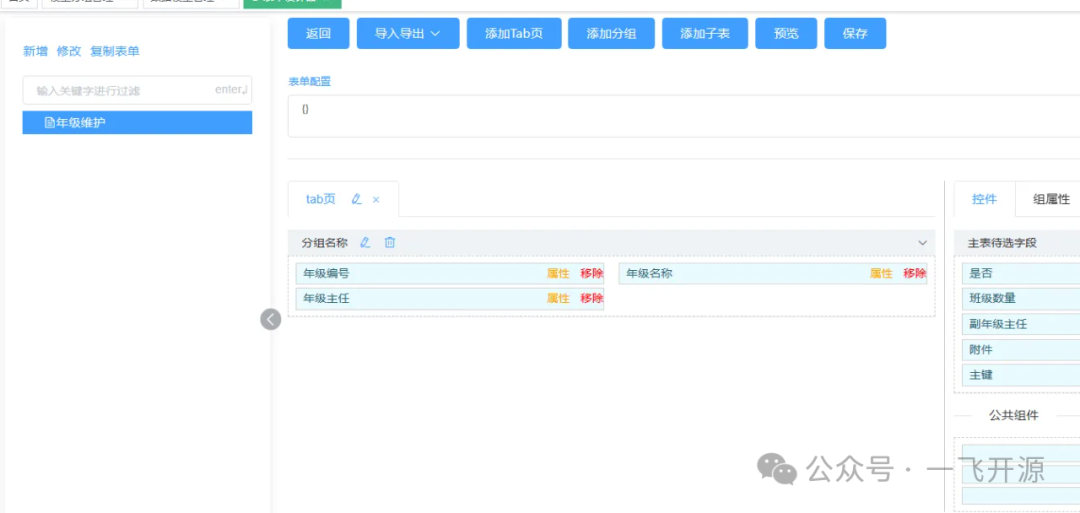


Source: LuBase Official Documentation
Note: The interface shown above is the Element-UI version of the frontend.
4. Feature Overview
Framework Features
Multi-Application Rapid Development Platform Low-Code Development Framework Low-Code Framework Low-Code Low-Code Tools Low-Code Development Tools
Framework Positioning
Designed for developers in the management software domain, it provides advanced encapsulation of page interactions and common functionalities, with the goal of gradually evolving into a platform-oriented and ecosystem-oriented development tool.
Small streams come together to form an ocean. Based on the PBC (Component-Based Development) philosophy, it makes functional module reuse easier.
Bringing management software development back to in-depth requirement analysis and problem-solving.
Target Audience and Positioning
This tool is designed for software developers. Therefore, this platform is essentially a low-code platform, and ease of use for business users is not its primary focus. In terms of usage scenarios, it is primarily aimed at software developers in the enterprise IT sector. It is a tool designed to improve the efficiency of management software development and feature iteration. We have never intended for business users to build systems using this tool.
Platform Design Philosophy
1. Data Model-Driven : Whether or not tools are used, good database design is the foundation of rapid software development;
2. Ubiquitous Extension Points : The purpose of a tool is to improve efficiency in certain processes. When providing advanced encapsulation of page-level functionality, flexibility for secondary development must not be sacrificed. The platform provides extension points across multiple frontend and backend stages throughout the entire lifecycle of a page to meet customization requirements. It also provides a native development mode for rewriting pages to accommodate personalized page scenarios.
3. Designed for Private Deployment : Supports multi-tenant and multi-application management, with private deployment options.
4. Focus Only on What We Do Best : Reporting and monitoring modules are not currently planned. Therefore, using this tool requires integration with your existing toolchain.
Main Platform Features
1. Multi-Application Management (Including Permissions) : Different applications can use different databases and be deployed independently on the frontend and backend. Each application has its own role management system, making application management and maintenance convenient. As shown below:

2. Data Model Engine : Provides dictionary table management, physical table creation, table relationship maintenance, and other functions.
3. Form Design Engine : Provides visual drag-and-drop form design based on existing data models.
4. Page Design Engine : Encapsulates common page layouts and button interactions, allowing list pages to be configured quickly by referencing data sources.
5. Workflow Engine : Deeply integrated with the form engine, this workflow engine supports common workflow configurations and exposes all events throughout the workflow lifecycle through MQ. Business functionality can be developed based on event listeners.
Project Source Code
The project adopts a frontend-backend separation architecture and is divided into two parts: the business application and the management console. The management console is primarily responsible for application management and configuration, while the business application handles application rendering. This separation is mainly intended to minimize the impact of management console feature iterations and optimizations on business applications.
The business application code consists of two repositories, with the following addresses:
|
Code Functionality |
|
Backend - Core Code |
|
Frontend - Business Application Code |
The management console code consists of two repositories, which are currently private. Access permissions can be granted as needed.
|
Code Functionality |
|
Backend - Management Console Code |
|
Frontend - Management Console Code |
Private Deployment Steps
See: Private Deployment Steps
5. Tech Stack
The backend is based on the SpringBoot framework, while the frontend is developed by the Layui team using the Layui-vue scaffold.
Private Deployment
Environment Preparation
Mysql8.0 、RocketMQ、Redis、JDK11、nginx
More content, please refer to README.md document