[Open Source] A Cloud-Based Examination System and Exam Platform with a Distributed Microservices Architecture and Separated Frontend and Backend
Open SourceEducation

1. Project Overview
Wuyouguo Examination Platform
A distributed microservices architecture with separated frontend and backend, based on Vue/Element UI and Spring Boot/Spring Cloud & Alibaba.
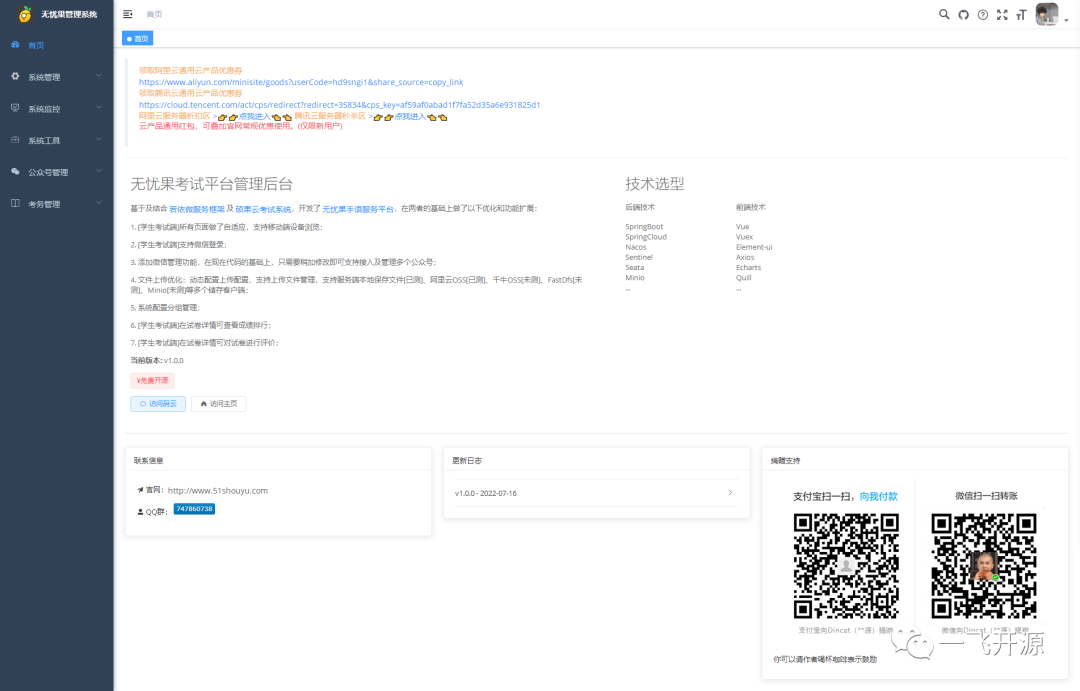
Based on and integrated with the RuoYi microservices framework and the Shu Guo Yun examination system, the Wuyouguo Sign Language Service Platform was developed. The functional code involving both systems has been open-sourced, with optimizations and feature extensions implemented on top of the original projects.
2. Open Source License
Licensed under Apache-2.0
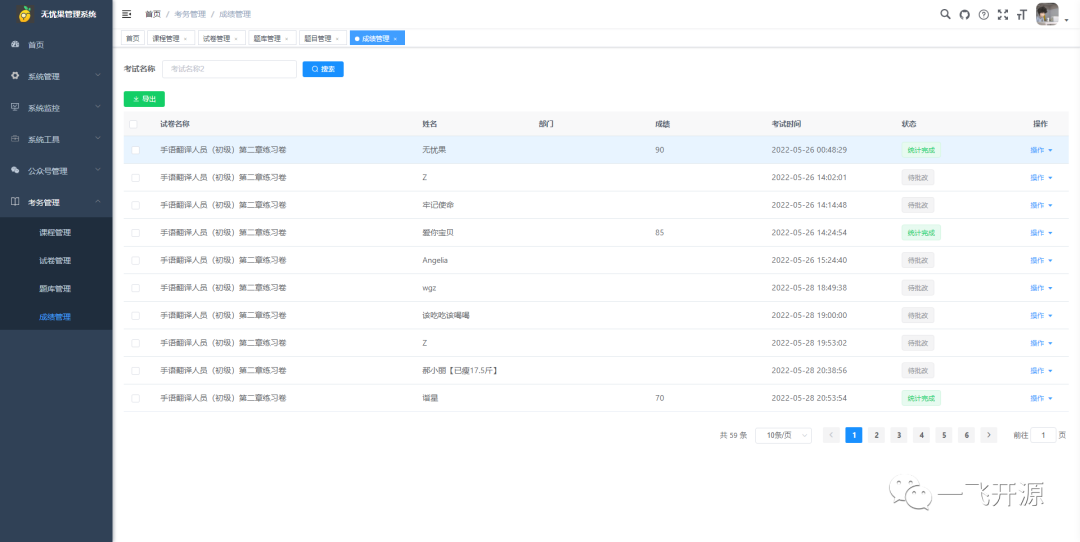
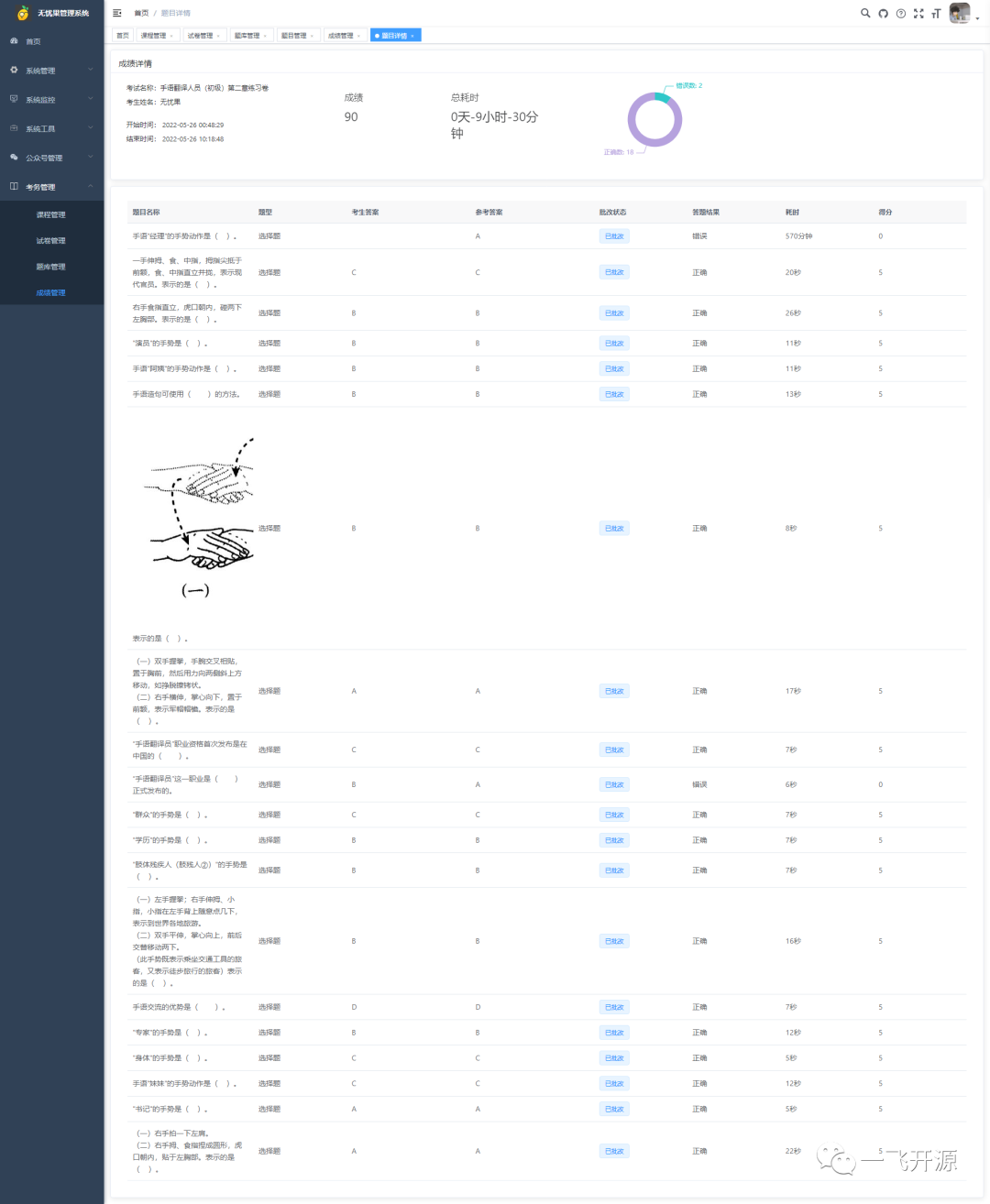
3. Screenshots
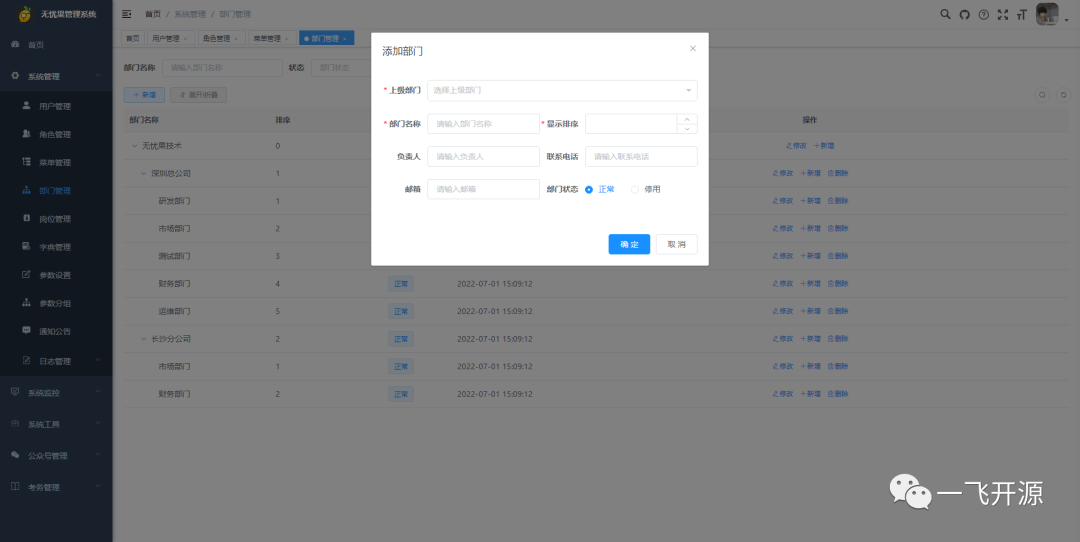
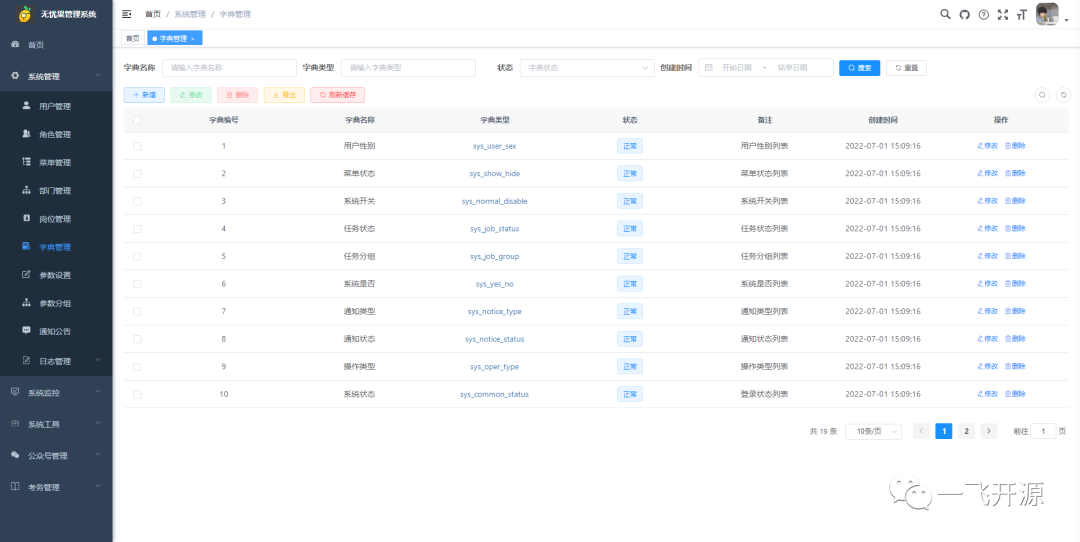
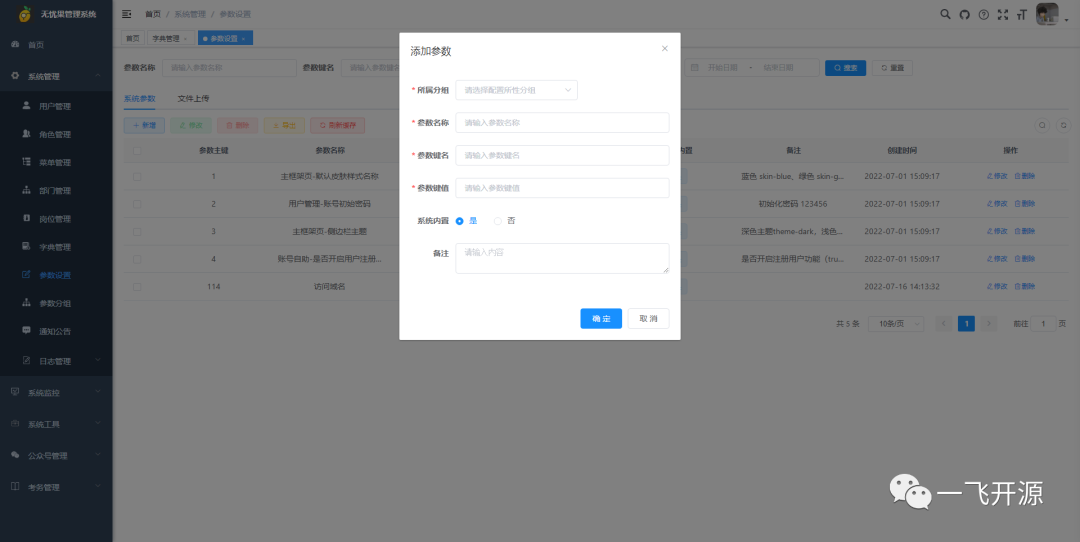
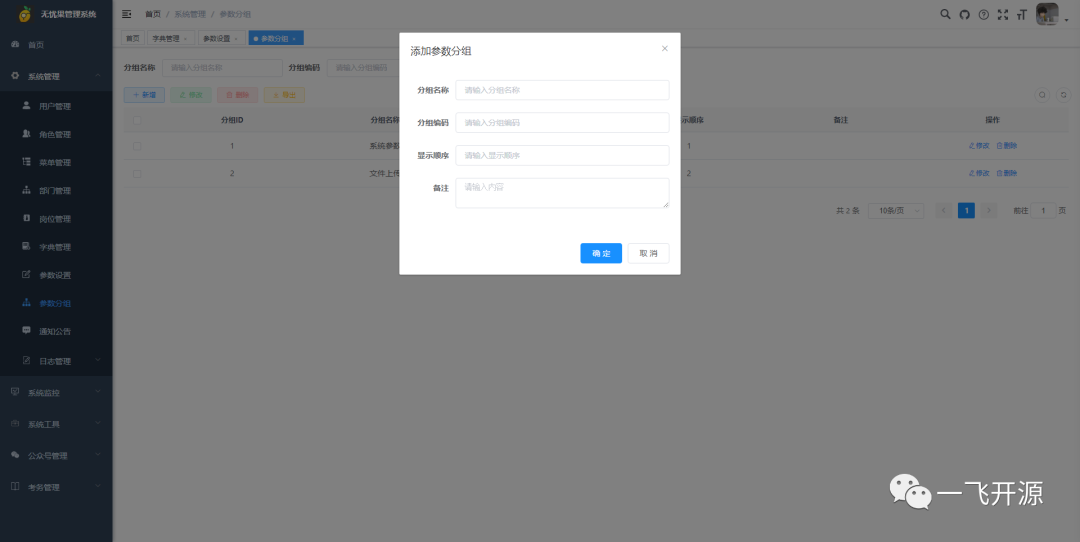
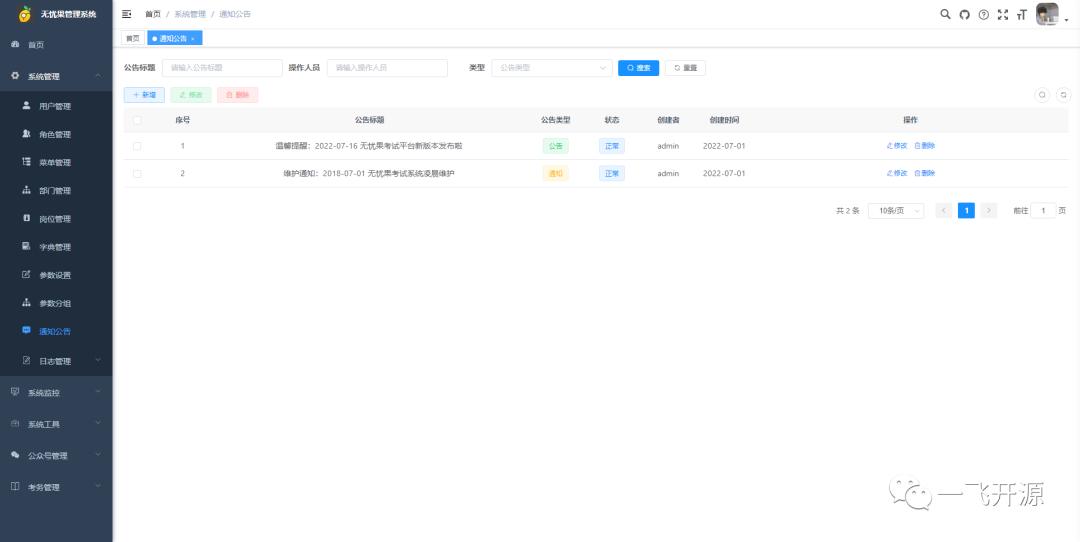
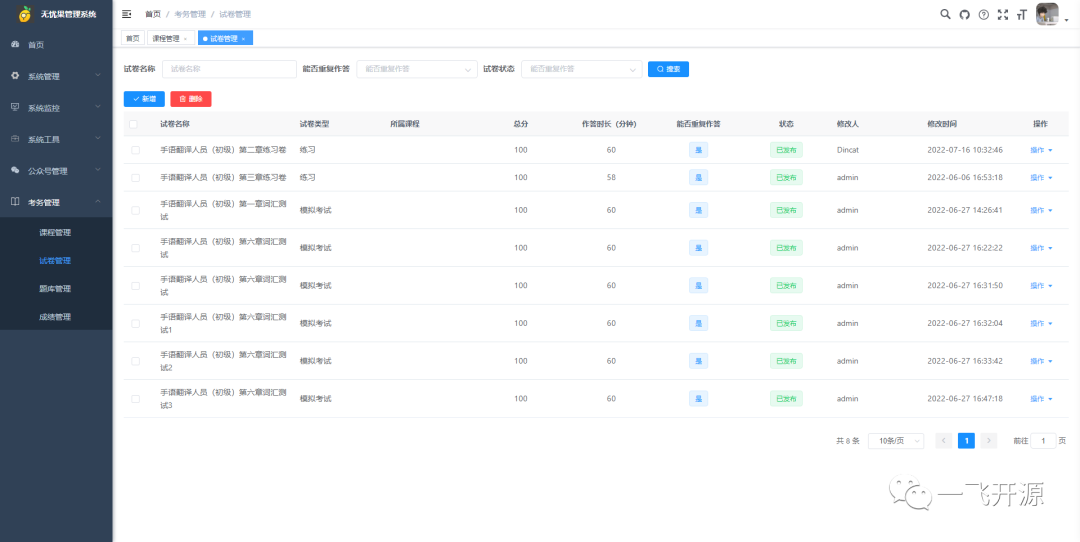
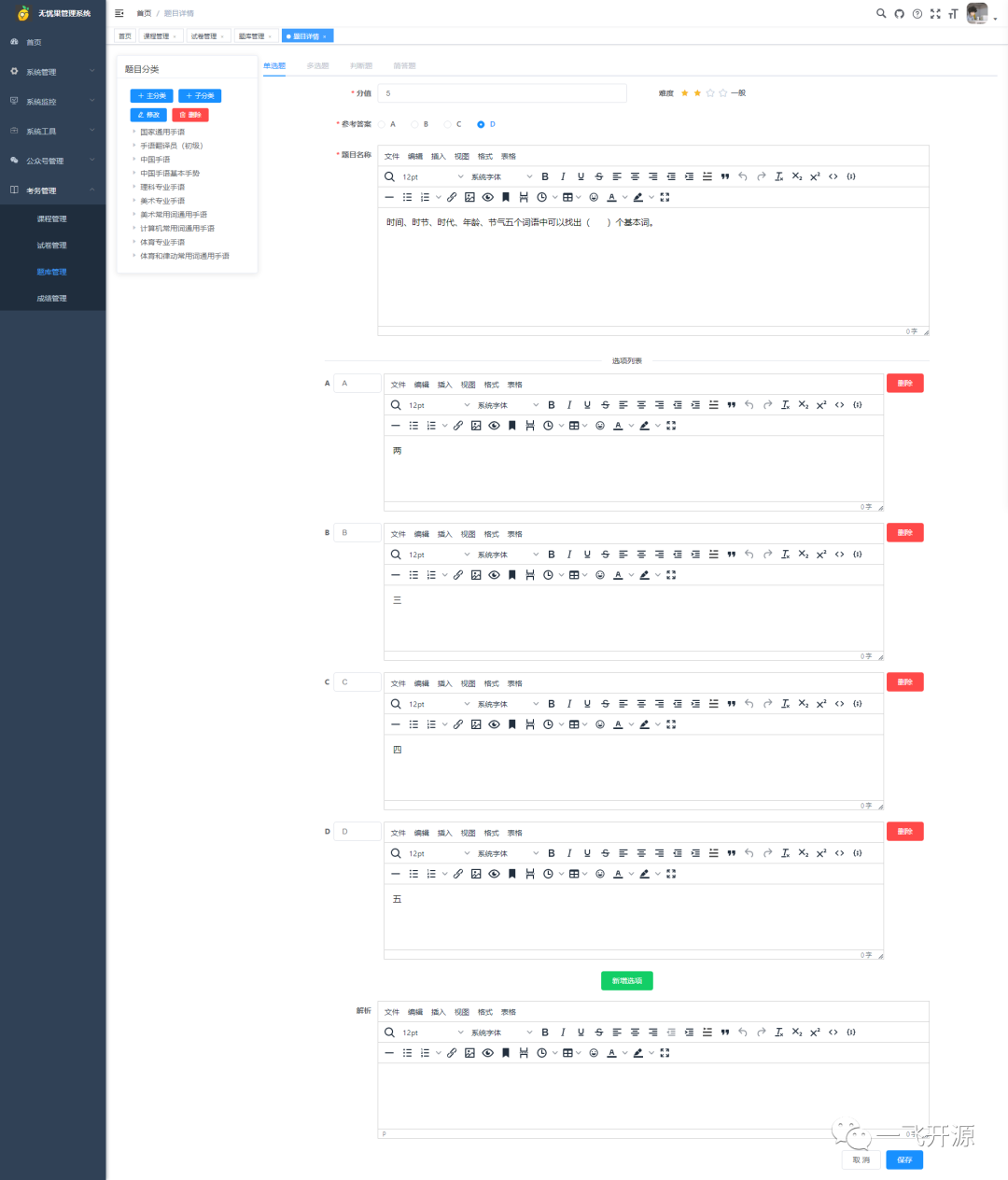
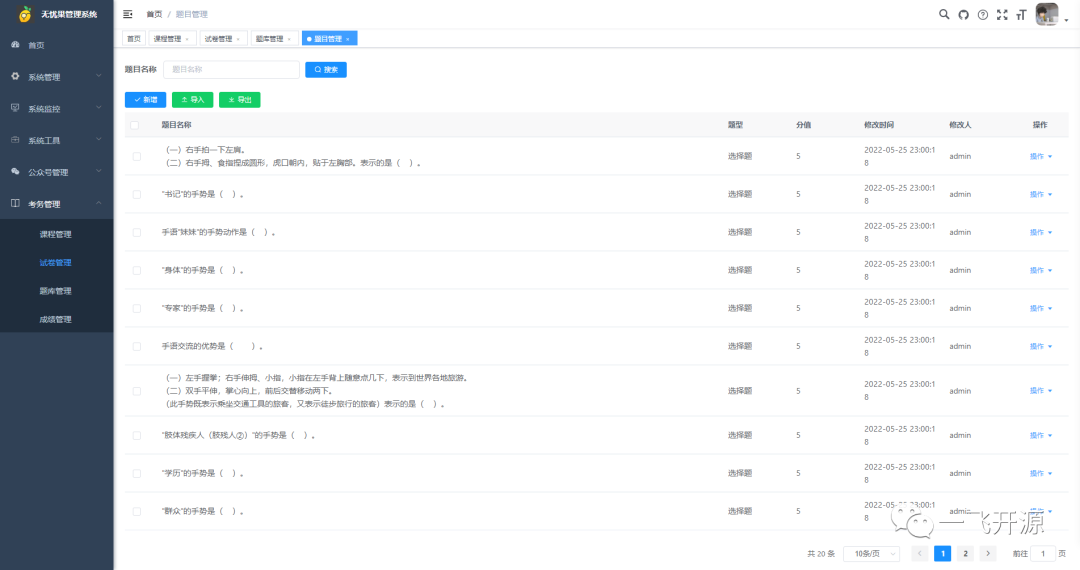
Demonstration Picture







4. Feature Overview
Based on and integrated with the RuoYi microservices framework and the Shu Guo Yun examination system, the Wuyouguo Sign Language Service Platform was developed. The functional code involving both systems has been open-sourced, with the following optimizations and feature extensions implemented:
- All pages of the student examination portal have been made responsive, supporting browsing on mobile devices;
- The student examination portal supports WeChat login;
- Added WeChat account management features. Based on the existing code, only minor modifications are needed to support integration and management of multiple official accounts;
- File Upload Optimization: Upload configurations can be managed dynamically. Supports file upload management and multiple storage clients, including local server file storage [Tested], Alibaba Cloud OSS [Tested], Qianniu OSS [Untested], FastDfs [Untested], and Minio [Untested];
- System configuration grouping management;
- Students can view score rankings on the exam paper details page;
- Students can rate exam papers on the exam paper details page;
Features will continue to be improved, and a mini program version is also being considered.
Built-in functions
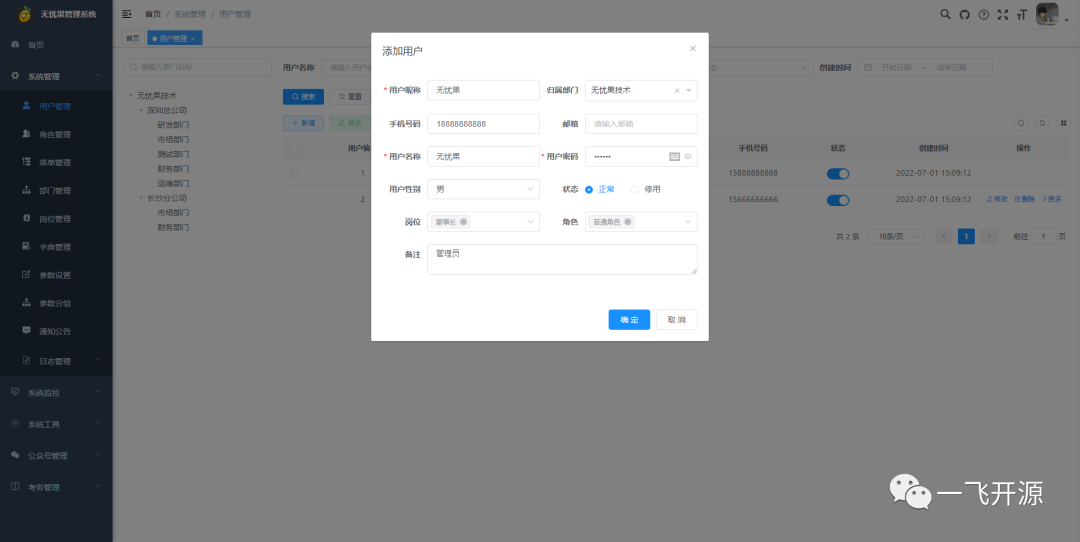
- User Management: Users are system operators, this function mainly completes system user configuration.
- Department Management: Configuring system organizational structures (companies, departments, teams), tree structure presentation supports data permissions.
- Position Management: Configure system users' positions.
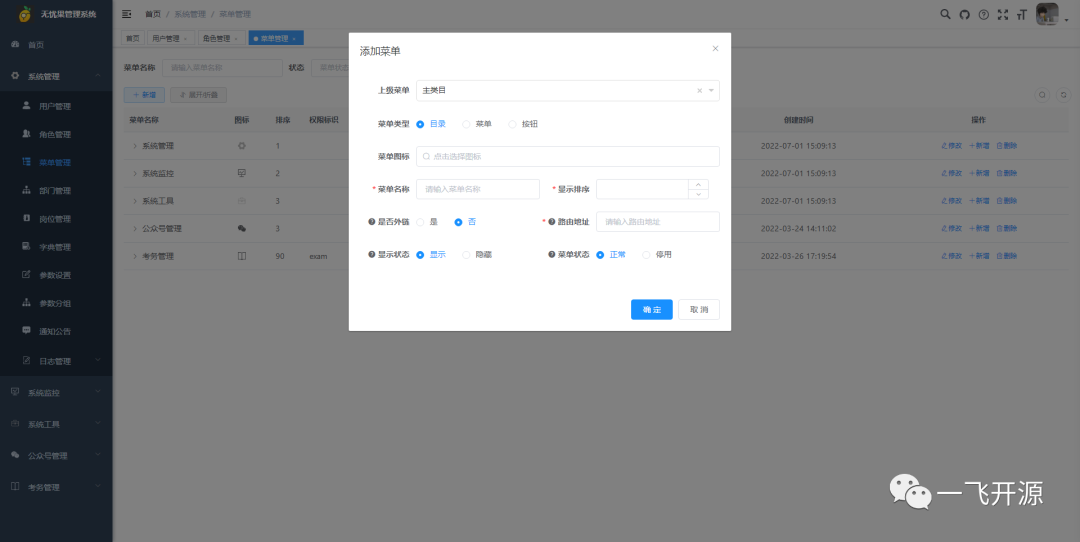
- Menu Management: Configure system menus, operation permissions, button permissions, etc.
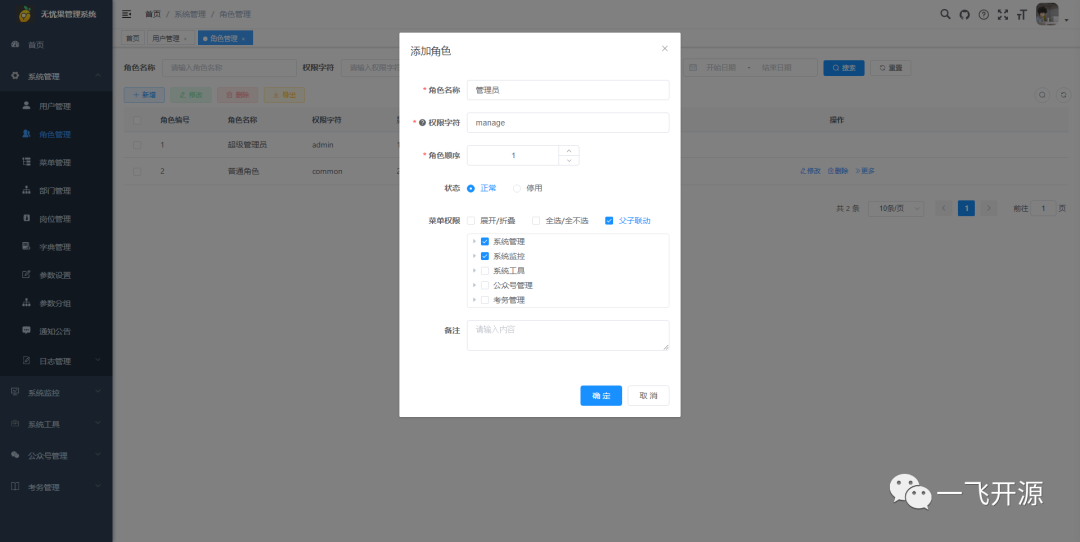
- Role Management: Role menu permission distribution, set role data range permissions by organization.
- Dictionary Management: Maintain some fixed data frequently used in the system.
- Parameter Management: Dynamically configure common parameters in the system.
- Notification Announcement: System notification and announcement information release and maintenance.
- Examination Administration: Course Management, Exam Paper Management, Question Bank Management, and Score Management.
- Official Account Management: WeChat Configuration, User Tags, User Messages, Media Management, Custom Menus, Automatic Message Replies, and Data Statistics.
- Operation Log: Record and query system normal operation logs; record and query system abnormal information logs.
- Login Log: Record and query system login logs, including login exceptions.
- Online Users: Monitor the status of active users in the system.
- Scheduled Tasks: Online (add, modify, delete) task scheduling, including execution result logs.
- Code Generation: Generate front-end and back-end code (java, html, xml, sql) supporting CRUD download.
- System Interface: Automatically generate API interface documents based on business code.
- Service Monitoring: Monitor current system CPU, memory, disk, stack, etc. related information.
- Online Builder: Drag and drop form elements to generate corresponding HTML code.
- Connection Pool Monitoring: Monitor the current system database connection pool status, and analyze SQL to find system performance bottlenecks.
5. Tech Stack
Architecture Diagram

Project introduction
- All features related to the RuoYi microservices framework and Shu Guo Yun examination system are open source.
- Adopts a frontend-backend separation architecture, with a microservices-based frontend version.
- The backend uses Spring Boot and Spring Cloud & Alibaba.
- Nacos is used as the service registry and configuration center, while Redis is used for authentication and authorization.
- Sentinel is used for traffic control, and Seata is used for distributed transactions.
- Uses RabbitMQ.
System Modules
com.wyg
├── wyg-ui                                          // Frontend Framework [80]
├── wyg-gateway                                     // Gateway Module [8080]
├── wyg-auth                                        // Authentication Center [9200]
├── wyg-api                                         // API Module
│       └── wyg-api-system                          // System API
├── wyg-common                                      // Common Module
│       └── wyg-common-core                         // Core Module
│       └── wyg-common-datascope                    // Data Scope
│       └── wyg-common-datasource                   // Multiple Data Sources
│       └── wyg-common-log                          // Logging
│       └── wyg-common-redis                        // Cache Service
│       └── wyg-common-security                     // Security Module
│       └── wyg-common-swagger                      // System API
├── wyg-modules         // Business Modules
│       └── wyg-system                              // System Module [9201]
│       └── wyg-gen                                 // Code Generation [9202]
│       └── wyg-job                                 // Scheduled Tasks [9203]
│       └── wyg-file                                // File Service [9300]
│       └── wyg-wechat                              // WeChat Service [8990]
│       └── wyg-exam                                // WeChat Service [11000]
├── wyg-visual                                      // Visual Management Module
│       └── wyg-visual-monitor                      // Monitoring Center [9100]
├──pom.xml                                          // Common Dependencies
下载地址 免费
评论